THE CHANGING NATURE PROJECT
  • Home
  • Case studies
    • 2024 >
      • Making Friends with Water
      • Managing the Lionfish Crisis in the Caribbean
      • Avian Havens in the Concrete Jungle
      • Ealgrass Meadows in Clayoquot Sound
      • Post-Pasture Regeneration in Northern Australia
      • Seal River Estuary
      • Cheonggyecheon Restoration Project
      • Synthetic Coral Reefs
      • Killer Algae
      • Naa'Waya'Sum Gardens
      • Boundary Bay Salt Marshes
      • Rewilding and Recolonizing Singapore
      • Dam Removal at Jordan River
      • Dam Removal in the Elwha River
      • Gut Bacteria Manipulation in Invasive Mosquitoes
      • Mangrove Forests Aquaculture
      • The Pacific Oyster
      • Prairie Wetland Restoration
      • Blight-Resistant American Chestnut Tree
      • Invasives Restoring Butterflies
      • Garry Oak Ecosystems
    • 2019 >
      • Aral Sea
      • Assisted Migration Adaptation Trial
      • Beacon Hill Park
      • Cape Town Water Crisis
      • Carpathian Rewilding
      • Cutthroat Conundrum
      • Eelgrass Wasting Disease
      • European Wolf Rewilding
      • Gorongosa National Park
      • Great Lakes Invasion
      • Mountain Goat Removal
      • Native to Invasive
      • Plains Bison Reintroduction
      • Rewilding the Danube Delta
      • Rewilding Victoria
      • South Purcells Caribou
    • 2016 >
      • Fisherman's Wharf
      • Uplands Park
      • BC Legislature Grounds
      • UVic Campus
      • Reconciliation of ‘Mee-a-can’
      • Cedar Hill Park
      • McLoughlin Point
      • Rock Bay
      • Songhees Point and Westsong Walkway
      • Summit Park
      • Swan Creek
      • Swan Lake
    • 2015 >
      • Lekwungen Food Systems >
        • Setting
        • History
        • Social & cultural dimensions
        • Interventions & adaptive management
        • Changing nature
        • Future trajectory
        • References
      • Green Links >
        • Setting
        • History
        • Social & cultural dimensions
        • Interventions & adaptive management
        • Changing nature
        • Future trajectory
        • References
      • Farmers Restoring the Land >
        • Setting
        • History
        • Social & cultural dimensions
        • Interventions & adaptive management
        • Changing nature
        • Future trajectory
        • References
      • Pleistocene Park >
        • Setting
        • History
        • Social & cultural dimensions
        • Interventions & adaptive management
        • Changing nature
        • Future trajectory
        • References
      • Rewilding the Seychelles >
        • Setting
        • History
        • Social & cultural dimensions
        • Interventions & adaptive management
        • Changing nature
        • Future trajectory
        • References
      • Rotorua Floating Wetlands >
        • Setting
        • History
        • Social & cultural dimensions
        • Interventions & adaptive management
        • Changing nature
        • Future trajectory
        • References
      • Rocky Mountain Trench >
        • Setting
        • History
        • Social & cultural dimensions
        • Interventions & adaptive management
        • Changing nature
        • Future trajectory
        • References
  • Contact

Green Links: A Case Study in Urban Connectivity   

Lindsay Kathrens, Zacc Lavigne, Lynn Rannankari, Ocean Wang    
Keywords.  Connectivity, novel ecosystem, urban fragmentation, habitat corridor
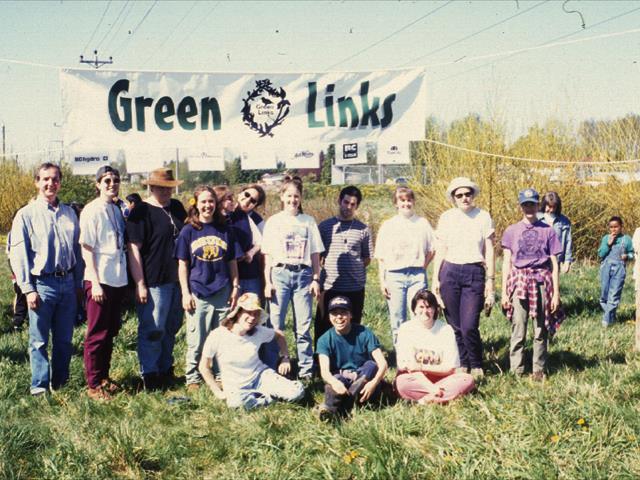
Summary. Green Links is an urban connectivity project initiated by Dr. Valentin Schaefer and a team of graduates from the Douglas Institute of Urban Ecology.  The project took place in the Lower Mainland of British Columbia between 1996 and 2005. This project was initiated in response to habitat fragmentation in urban areas within the Lower Mainland, as caused by extensive urbanization and land use change.  Green Links was implemented with the primary goals of increasing biodiversity and habitat connectivity, through the enhancement of habitat corridors.  Drawing inspiration from connectivity projects in forest ecosystems, which aim to increase the mobility of wildlife across clear-cuts, Green Links is one of the first major projects in Canada to apply connectivity logic to the urban environment. By creating a matrix of patches and corridors connecting city parks, utility right-of-ways, backyards, balconies, streams, and forests, Green Links’ aim was to facilitate species abundance and allow for the movement of flora and fauna within the municipalities of Delta, Surrey, Burnaby and Coquitlam in the Lower Mainland. This project demonstrates a novel approach to ecosystem improvement and management undertaken in immensely altered ecosystems, where prohibitive barriers to traditional conservation and restoration approaches exist.

This case study serves to explore the actions taken in the Green Links Coquitlam Demonstration Site, located within the municipality of Coquitlam, BC. Enhancements of backyard habitats, schoolyards, and a utility right-of-way allowed for the increased connectedness of several environmentally sensitive and natural areas within the municipality. Green Links was undertaken with extensive involvement from the wider community, and successfully served to foster habitat stewardship across the Lower Mainland.

Acknowledgements.  We would like to express our gratitude to Dr. Valentin Schaefer for his guidance and insight, which aided us significantly in exploring this case study.

Geographic and ecological setting

History

Social and cultural dimensions

Interventions & adaptive management

Changing nature

Future trajectory

References

Powered by Create your own unique website with customizable templates.