THE CHANGING NATURE PROJECT
  • Home
  • Case studies
    • 2024 >
      • Making Friends with Water
      • Managing the Lionfish Crisis in the Caribbean
      • Avian Havens in the Concrete Jungle
      • Ealgrass Meadows in Clayoquot Sound
      • Post-Pasture Regeneration in Northern Australia
      • Seal River Estuary
      • Cheonggyecheon Restoration Project
      • Synthetic Coral Reefs
      • Killer Algae
      • Naa'Waya'Sum Gardens
      • Boundary Bay Salt Marshes
      • Rewilding and Recolonizing Singapore
      • Dam Removal at Jordan River
      • Dam Removal in the Elwha River
      • Gut Bacteria Manipulation in Invasive Mosquitoes
      • Mangrove Forests Aquaculture
      • The Pacific Oyster
      • Prairie Wetland Restoration
      • Blight-Resistant American Chestnut Tree
      • Invasives Restoring Butterflies
      • Garry Oak Ecosystems
    • 2019 >
      • Aral Sea
      • Assisted Migration Adaptation Trial
      • Beacon Hill Park
      • Cape Town Water Crisis
      • Carpathian Rewilding
      • Cutthroat Conundrum
      • Eelgrass Wasting Disease
      • European Wolf Rewilding
      • Gorongosa National Park
      • Great Lakes Invasion
      • Mountain Goat Removal
      • Native to Invasive
      • Plains Bison Reintroduction
      • Rewilding the Danube Delta
      • Rewilding Victoria
      • South Purcells Caribou
    • 2016 >
      • Fisherman's Wharf
      • Uplands Park
      • BC Legislature Grounds
      • UVic Campus
      • Reconciliation of ‘Mee-a-can’
      • Cedar Hill Park
      • McLoughlin Point
      • Rock Bay
      • Songhees Point and Westsong Walkway
      • Summit Park
      • Swan Creek
      • Swan Lake
    • 2015 >
      • Lekwungen Food Systems >
        • Setting
        • History
        • Social & cultural dimensions
        • Interventions & adaptive management
        • Changing nature
        • Future trajectory
        • References
      • Green Links >
        • Setting
        • History
        • Social & cultural dimensions
        • Interventions & adaptive management
        • Changing nature
        • Future trajectory
        • References
      • Farmers Restoring the Land >
        • Setting
        • History
        • Social & cultural dimensions
        • Interventions & adaptive management
        • Changing nature
        • Future trajectory
        • References
      • Pleistocene Park >
        • Setting
        • History
        • Social & cultural dimensions
        • Interventions & adaptive management
        • Changing nature
        • Future trajectory
        • References
      • Rewilding the Seychelles >
        • Setting
        • History
        • Social & cultural dimensions
        • Interventions & adaptive management
        • Changing nature
        • Future trajectory
        • References
      • Rotorua Floating Wetlands >
        • Setting
        • History
        • Social & cultural dimensions
        • Interventions & adaptive management
        • Changing nature
        • Future trajectory
        • References
      • Rocky Mountain Trench >
        • Setting
        • History
        • Social & cultural dimensions
        • Interventions & adaptive management
        • Changing nature
        • Future trajectory
        • References
  • Contact

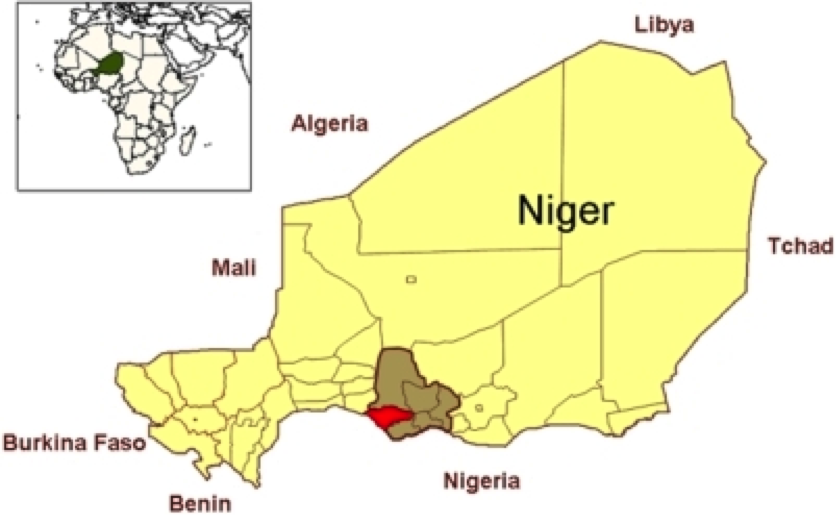
Farmers Restoring the Land in a Time of Change: Farmer Managed Natural Regeneration in Maradi, Niger   

Hyeone Park & Kristen Walsh    
Keywords.   desertification, restoration, farmers, FMNR, Niger
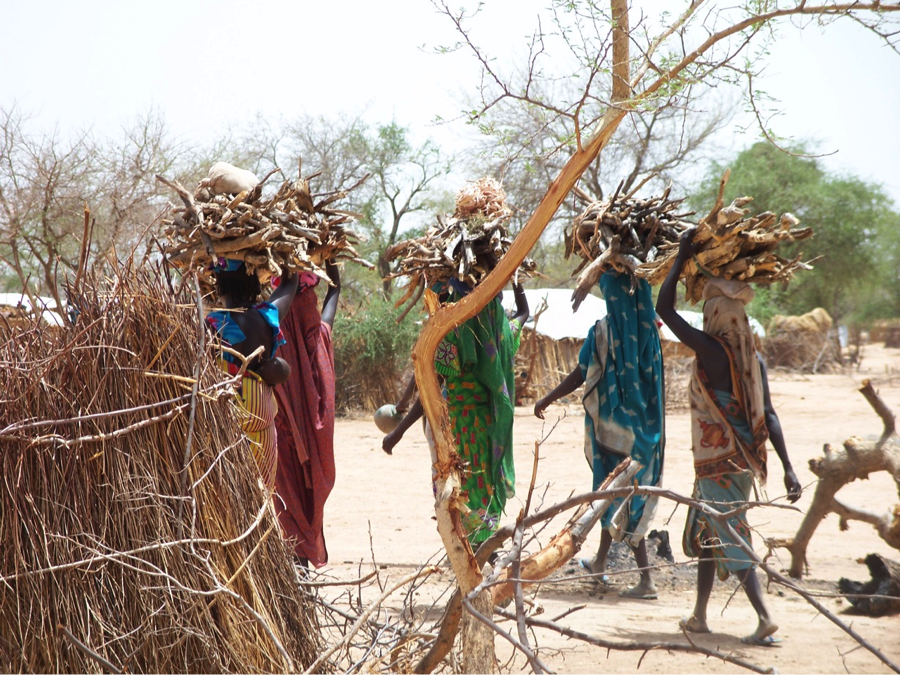
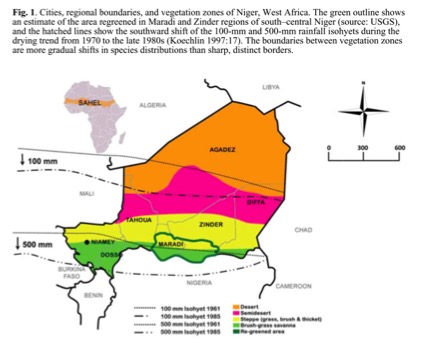
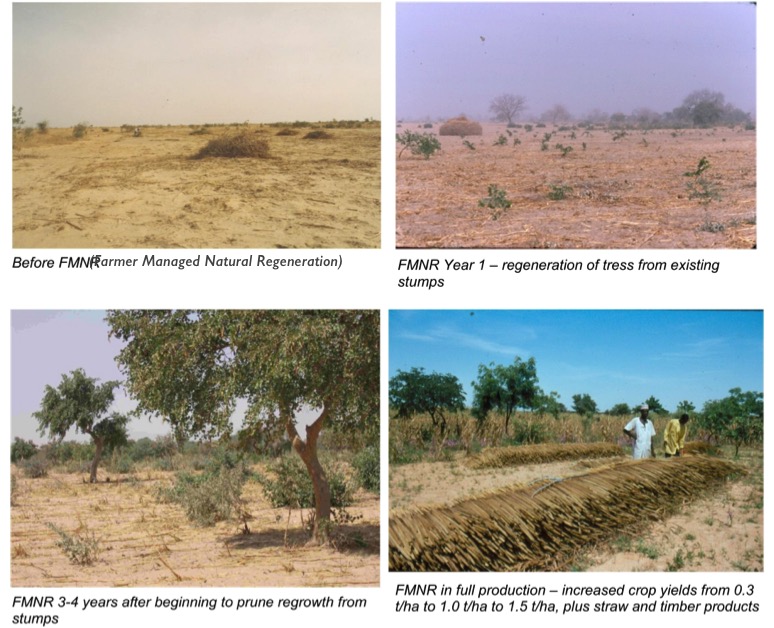
Summary.    In the wake of widespread desertification processes around the world and the fleet of changing landscapes they introduce, growing attention is being drawn to Farmer Managed Natural Regeneration (FMNR) practices, which have been particularly successful in Niger. A simple regeneration technique, and a twist on a local historical practice, FMNR involves pruning and coppicing tree stumps and roots. The change in perspective of land management was farmer-led and spread by word of mouth, speaking to the power of local knowledge and community driven restoration initiatives. Contributing to the re-greening of 5 million hectares of degraded land in Niger, the practice has inspired projects across the Sahel and around the world. Our case study explores the relationship between natural regeneration, changing natures and ecologically minded food production, and offers an example of minimal-- yet extremely effective-- intervention. 
Acknowledgements.  Thanks to our great class and Dr. Eric Higgs for stimulating discussions. 

Geographic and ecological setting

History

Social and cultural dimensions

Interventions & adaptive management

Changing nature

Future trajectory

References

Powered by Create your own unique website with customizable templates.